 ASIC Miner Insider
Antminer S21 XP Review: Maximize ROI with Real-World Benchmarks & Setup Specs (Air vs. Hyd)
Discover the real-world performance, efficiency, and infrastructure requirements of the Bitmain Antminer S21 XP.
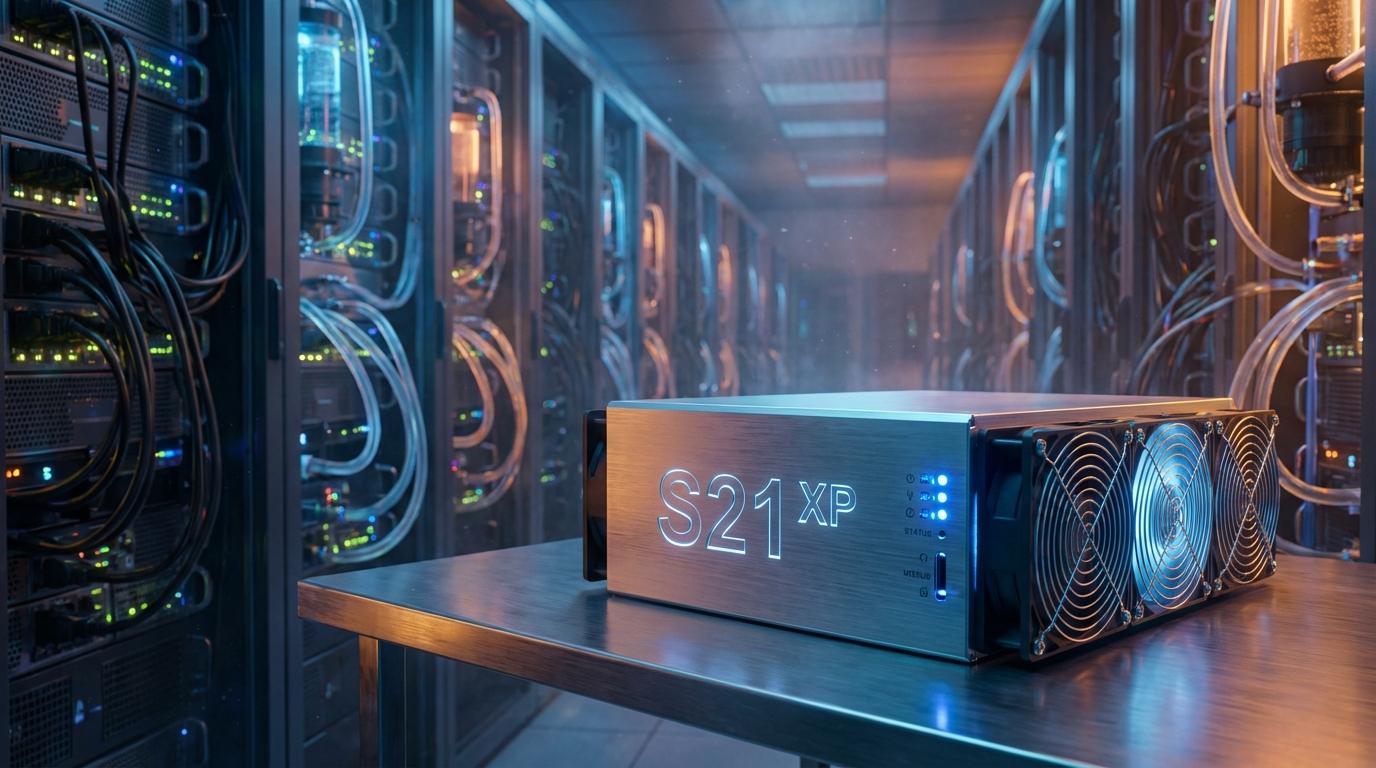
Welcome to our comprehensive Antminer S21 XP review. The Bitmain Antminer S21 XP is currently the industry's leading SHA-256 ASIC miner, delivering a rated hashrate of 270 TH/s at an unprecedented energy efficiency of 13.5 J/TH. Consuming 3645 watts of wall power, this machine is designed to help miners maintain profitability despite rising network difficulties. In this guide, we break down real-world benchmarks, tiered ROI calculators, and the exact electrical setups required for the Air, Hydro, and Immersion models.
As we navigate the 2026 mining landscape, the Bitcoin network difficulty continues to hit all-time highs, requiring massive computational power to secure block rewards. High electricity costs are eating into miner profits, and extreme hardware requirements—such as 3-phase power and extreme noise—are causing major headaches for buyers who purchase without understanding their own infrastructure limits. Furthermore, many miners naturally distrust official manufacturer specifications. Does the Antminer S21 XP actually perform as advertised in real-world conditions, and is it a viable investment for both home miners and industrial farms? The S21 XP sets a new gold standard, but profitability and setup success depend entirely on choosing the right cooling variant for your specific electrical and acoustic environment.
The Antminer S21 XP Overview: The 13.5 J/TH Efficiency King
The standard air-cooled Antminer S21 XP operates with an energy efficiency rating of 13.5 J/TH. In a 2026 mining landscape where margins are razor-thin, efficiency is the single most important metric. By requiring only 3645 watts of wall power consumption to generate its massive 270 TH/s output, this unit significantly outpaces older generations like the S19 series, allowing operations to mine more Bitcoin for every dollar spent on electricity. As block subsidies decrease over time, the cost of production per coin becomes the defining factor of a mining farm's survival. The internal architecture represents a massive leap in semiconductor engineering, allowing operations to squeeze every drop of hashing power from their localized energy budgets.
Full Technical Specifications: Air-Cooled vs. Hydro vs. Immersion
Bitmain strategically released multiple variations of the S21 XP to cater to different scale environments, ranging from single-unit hobbyists to mega-watt institutional facilities.
Air-Cooled S21 XP
The base model is the air-cooled Bitmain Antminer S21 XP, which delivers a rated hashrate of 270 TH/s using the SHA-256 algorithm. It supports a power input range of 220 to 277V at 50 to 60Hz and connects to mining networks via a standard RJ45 Ethernet 10/100M interface. This makes it the most accessible unit for standard hosting facilities with traditional HVAC cooling solutions.
Antminer S21 XP Hyd
For industrial-scale operations seeking maximum density, the hydro-cooled variant, the Antminer S21 XP Hyd, achieves a massive hashrate of 473 TH/s. It operates with an improved energy efficiency of 12.0 J/TH. Power consumption for this beast is 5,676 watts with a 5% tolerance. Internally, the Antminer S21 XP Hyd utilizes 324 of Bitmain's BM1370 ASIC chips distributed across three hashboards. The physical dimensions are highly compact at 410 by 170 by 209 mm, making it an excellent choice for dense server rack deployments where space is at an absolute premium.
Antminer S21 XP Immersion
Finally, the Antminer S21 XP Immersion variant is designed for liquid immersion cooling and delivers a hashrate of 300 TH/s. The power consumption of the Antminer S21 XP Immersion model is 4050 watts. Immersion cooling removes the need for fans entirely, drastically enhancing the machine's lifespan by eliminating dust accumulation and thermal variance across the hashboards.
Rated Specs vs. Real-World Benchmarks: Does It Deliver?
One of the biggest pain points in the ASIC market is the systemic distrust of official manufacturer specifications. We analyzed extensive 72-hour benchmark testing to see if the S21 XP holds up to Bitmain's lofty claims. Reviewers subjected the units to changing ambient temperatures to measure thermal stability. In real-world benchmark testing, the air-cooled S21 XP averaged 269.3 TH/s with a wall power draw of 3,690 W. This proves the machine performs exceptionally close to its advertised 270 TH/s and 3645W specifications, cementing its reliability under continuous, heavy load. The fact that the average output hovered at 269.3 TH/s indicates that Bitmain has significantly improved its chip binning process, ensuring less performance variance between individual units straight off the production line.
Profitability & ROI Analysis (2026 Scenarios)
Before purchasing hardware, miners must evaluate the Antminer S21 XP profitability against their local utility rates. There are absolutely no guaranteed profits in Bitcoin mining, as ROI depends entirely on fluctuating network difficulty and unpredictable future BTC price action. Capital expenditure is only the initial hurdle; operational expenditure is what dictates long-term survival.
Daily Returns Based on Varying Electricity Rates
Electricity costs dictate your break-even point. At $0.04/kWh, the S21 XP generates strong daily profit margins, allowing miners to comfortably accumulate sats. At $0.08/kWh, the margins shrink but remain viable purely due to the incredible 13.5 J/TH efficiency shielding the operation from losses. However, at $0.12/kWh or higher, profits are heavily squeezed, requiring miners to rely on future asset appreciation rather than immediate cash flow to justify the operational costs.
Estimating ROI Timelines & Resale Value
Assuming highly favorable conditions and low power costs, the ROI period for the Antminer S21 XP is estimated between 14 to 18 months. Secondary market resale value is also a massive factor for farm operators. Highly efficient machines like the S21 XP retain their hardware value much longer than older, less efficient models, giving miners an exit strategy if they need to liquidate assets during a bear market.
Infrastructure Prerequisites: Power, Cooling, and Noise
Buying the miner is only half the battle; proper infrastructure is mandatory to prevent thermal throttling, hardware degradation, and potential electrical fires.
Electrical Setup: Single-Phase vs. 3-Phase Power
While the air-cooled model uses standard 220-277V single-phase power that is relatively easy to accommodate, the hydro models are a different story. The Antminer S21 XP Hyd requires a 3-phase 380-415V AC industrial power input to operate. This is a critical warning for home miners who only have access to standard residential grid connections—you cannot simply plug the Hyd model into a standard wall outlet.
S21 XP Hyd Plumbing & Cooling Requirements
For the hydro units, miners must invest in dry coolers, proper manifold systems, and specialized coolant fluids. Standard tap water will quickly corrode the internal plates of the water blocks. Operators must maintain strict coolant flow rates and monitor intake temperatures to prevent catastrophic overheating of the 324 BM1370 ASIC chips.
Home Mining Viability & Soundproofing
If you are planning to run an ASIC in your home or garage, you must understand the S21 XP noise level decibels. The noise level of the air-cooled Antminer S21 XP reaches approximately 75 to 76 decibels during normal operation—comparable to a loud industrial vacuum cleaner running constantly. Conversely, the hydro-cooled Antminer S21 XP Hyd operates at a significantly lower noise level of around 50 decibels due to the lack of high-RPM cooling fans. If you choose air cooling for a residential setting, specialized soundproofing boxes and dedicated ventilation ducting are an absolute necessity.
Model Comparisons & The Future of SHA-256 Mining
When stacking the Antminer S21 XP against competitors like the Whatsminer M60S, Bitmain consistently wins on raw electrical efficiency, while MicroBT often takes the crown for rugged environmental durability. However, the S21 XP remains the premium choice for pure output-to-wattage ratios.
Looking Ahead: The Upcoming Antminer S21 XP+ Hyd
Technology in the ASIC sector moves incredibly fast. The upcoming Antminer S21 XP+ Hyd model increases performance to a staggering hashrate of 500 TH/s. Set for broader deployments, the Antminer S21 XP+ Hyd achieves an industry-leading energy efficiency rating of 11 J/TH, giving the market a clear glimpse into the future of ultra-efficient SHA-256 mining operations.
Troubleshooting Common S21 XP Firmware & Overheating Errors
Proper environmental ventilation is crucial for maximum uptime. If an air-cooled S21 XP begins thermal throttling, the firmware will automatically reduce its hashrate to protect the BM1370 chips from melting. Ensure hot and cold aisles are strictly separated in your hosting facility. Networking issues can also cause headaches; the standard RJ45 Ethernet 10/100M interface requires a highly stable routing setup to prevent stale network shares, which can artificially lower your effective pool hashrate. Regularly check the miner's web interface log dashboard for kernel errors or fan speed anomalies to catch hardware failures before they become fatal.
Final Verdict: Is the S21 XP Worth the Premium Price?
From my perspective, the Antminer S21 XP is undoubtedly a masterpiece of modern mining engineering, but it is not a casual or blind purchase. The 13.5 J/TH efficiency of the standard air-cooled model and the raw 473 TH/s power of the hydro-cooled model make them phenomenal tools for maximizing mining yields in 2026. However, the sheer infrastructure demands—especially the heavy 3-phase power requirement for the Hyd model and the aggressive 75-decibel noise output of the air-cooled unit—mean that this hardware is best suited for meticulously prepared facilities rather than amateur hobbyists. If you have secured access to cheap, reliable electricity and the correct electrical panels, the premium upfront capital cost is absolutely justified by the long-term operational savings and resilience against network difficulty spikes.
FAQs
What is the hashrate and energy efficiency of the standard air-cooled Antminer S21 XP?
The standard air-cooled Bitmain Antminer S21 XP delivers a rated hashrate of 270 TH/s using the SHA-256 algorithm.
It achieves an industry-leading energy efficiency of 13.5 J/TH while consuming 3645 watts of wall power.
Does the Antminer S21 XP meet its advertised specifications in real-world benchmarks?
Yes, benchmark tests show it performs exceptionally close to its official specs.
During 72-hour testing, the air-cooled S21 XP averaged 269.3 TH/s with a wall power draw of 3,690 W, proving high thermal stability and reliability under continuous heavy load.
What are the main differences between the S21 XP Hydro and Immersion models?
Bitmain offers two specialized liquid-cooled variants for industrial setups:
- S21 XP Hyd: Delivers a massive 473 TH/s at 12.0 J/TH, but requires 3-phase industrial power and dedicated dry coolers.
- S21 XP Immersion: Delivers 300 TH/s and operates submerged in specialized liquid. This completely eliminates fans, extending the machine's lifespan by preventing dust accumulation and thermal variance.
Is the Antminer S21 XP suitable for home mining setups?
Operating the S21 XP at home presents significant infrastructure challenges:
- Air-cooled: Reaches noise levels of 75-76 decibels (comparable to a loud industrial vacuum) and requires strict hot/cold aisle ventilation and soundproofing.
- Hydro-cooled: Quieter at around 50 decibels, but strictly requires a 3-phase 380-415V AC industrial power input, which is rarely available in standard residential grids.
What is the estimated ROI timeline for the Antminer S21 XP?
Under highly favorable conditions with low electricity costs (around $0.04/kWh), the estimated Return on Investment (ROI) period is between 14 to 18 months.
However, miners with electricity costs of $0.12/kWh or higher will see their profit margins heavily squeezed, making ROI highly dependent on future Bitcoin price appreciation and network difficulty.